
01
Scope and methodology
Define what each dataset measures before calling anything a boom.
This is a market report for Hong Kong collectors and players, not a census of every Hong Kong sale. There is no public database covering all shops, social platforms, card shows and private transactions. Local reporting in August 2026 noted that even the number of Hong Kong shops selling Pokémon cards is not officially counted. Any claim to know total Hong Kong turnover or a market-wide average price therefore needs a disclosed sample before it can be treated as representative.
Local evidence
Hong Kong participationOfficial tournament capacity, card-show scale and local reporting indicate whether the ecosystem is broadening.
External benchmark
Japanese and global liquiditySNKRDUNK, PSA, GemRate and eBay provide verifiable trade, grading or search signals—but not total Hong Kong turnover.
The evidence is separated into four layers: official Pokémon release dates, recommended retail prices and Hong Kong events; SNKRDUNK's published Japanese transaction rankings and averages; PSA's official backlog and Auction Prices Realized descriptions plus GemRate's monthly population-report compilation; and eBay's official marketplace search and sales signals. Currency, period, condition and grade remain exactly labelled. An asking price is not presented as a sale, and a raw card is never compared directly with PSA 10 without qualification.
The latest complete, comparable 2026 transaction ranking covers 1 January through 30 June, so this report uses “2026 H1 Top 10.” July and August releases, anniversary products and Hong Kong events are presented separately from official announcements rather than blended into the H1 ranking.
View the complete data and sourcesRankings, PSA monthly output, sealed-box changes, data dates and original source URLs used throughout the report.
VIEW DATA ↗02
Hong Kong market: play, collecting and trade
The ecosystem is more resilient when three different forms of demand coexist.
Hong Kong's 2026 market is best understood through two developments that can look contradictory. Card shows, rare cards, graded inventory and anniversary products are drawing collector capital, while local shops are also investing in teaching and organised play. This play-plus-collecting-plus-trading structure creates several entry points: newcomers can begin with affordable decks and set lists, while advanced collectors use grading and auction records to compare scarcer material.
These figures cannot be added: a show reports attendance or exhibitors, while league capacity is a participation ceiling. Together, however, they document local infrastructure at meaningful scale. Summer Grade10 material listed more than 120 Hong Kong and international exhibitors from Japan, the United States, Britain and across Asia. The official Master Ball League used the Hong Kong Convention and Exhibition Centre and offered 1,728 Masters places.
Play
Competitive demandDriven by legality, deck utility, official events and the cost of building a deck.
Collect
Character and art demandDriven by Pikachu, Charizard, Eeveelutions, artists, promos and completion goals.
Trade
Liquidity and gradingDriven by exact card identity, condition, comparable sales and buyer depth.
Japanese-card references are highly relevant in Hong Kong because of language familiarity, release timing and supply links, but a Japanese platform price is not automatically a Hong Kong executable price. Exchange rates, freight, platform fees, grading shipment, payment method and the ability to inspect a card all create friction. Professional analysis makes these adjustments visible instead of multiplying yen by today's exchange rate.
03
Why price and trading activity feel stronger in 2026
The anniversary is a catalyst, but supply, characters and product stories determine where gains concentrate.
The market experience in 2026 is clearly more intense than in 2025. PSA monthly output reached successive highs in March, April and June; GemRate reported roughly 2.50 million PSA items graded in June, 74% above the same month a year earlier. In SNKRDUNK's 7 January–7 April sealed-box study, every member of the published top ten rose by more than 76%. These measures track grading demand, supply flow and sealed-product prices from different angles. Their direction is consistent, but their statistical coverage is not identical.
In Hong Kong, stronger demand often appears first in faster sell-through, denser listings for popular cards and narrower bid–ask spreads before it reaches older sealed products or high-grade singles. More completed sales with a tighter spread suggests improving liquidity; higher listings with sparse transactions more often indicate temporary supply pressure. The distinction matters because the risks are very different.
Four forces overlap in the same year
Pokémon's brand anniversary began in February and Pokémon Card 30th products were revealed in June, returning older cards and Pikachu to the centre of search demand.
The MEGA series that began building in late 2025 continued into 2026. Mega Charizard X, Mega Gengar and Mega Greninja all appeared in the H1 top ten.
Regional Pikachu promos, McDonald's cards, anniversaries and 151 products have origins that a new collector can understand quickly and search across languages.
PSA 10 improves comparability across markets, but a wave of newly graded inventory also expands sellable supply.
A gainers table has survivorship bias: it shows the best performers but not flat, falling or inactive boxes. Fusion Arts rose from an average ¥29,993 to ¥68,500 during the cited period and Pokémon 151 from ¥32,458 to ¥72,645, but neither result proves that a new box will reproduce the move. Reprints, lotteries, chase-card composition and how much expectation was already priced in all matter.
04
From 2025 to 2026: the structure of demand changed
Promos and Eeveelutions delivered breadth in 2025; Pikachu and Mega Evolution dominate 2026 H1.
McDonald's Pikachu Promo ranked first in SNKRDUNK's 2025 Grade A single-card list, while Umbreon ex SAR recorded more than 7,000 transactions over the year. The top ten contained four Pikachu-related cards, two Eeveelutions, two trainer-linked cards, Mega Charizard X ex SAR and Magikarp AR. This mix shows why affordability, a simple origin story, recognisable art and character demand can generate substantial turnover.
The H1 2026 list is more concentrated: five entries are Pikachu or regional Pikachu promos, four are Mega Evolution cards, and only Psyduck AR sits outside those themes. That does not mean other Pokémon have no market; it means leadership is narrower. For a Hong Kong collector, the more useful questions are whether character demand can persist, whether the printing is easy to identify, and whether the theme offers accessible as well as premium entry points.
Full-year 2025
2026 H1
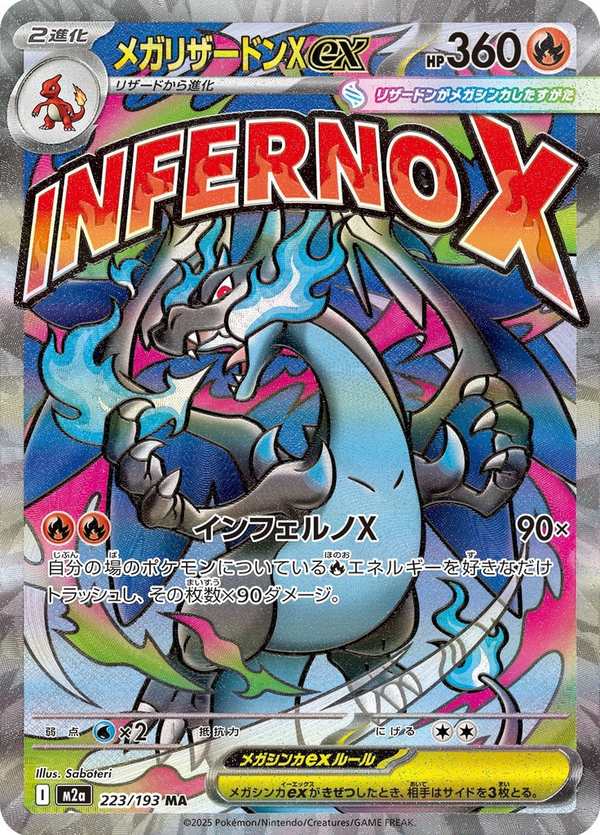
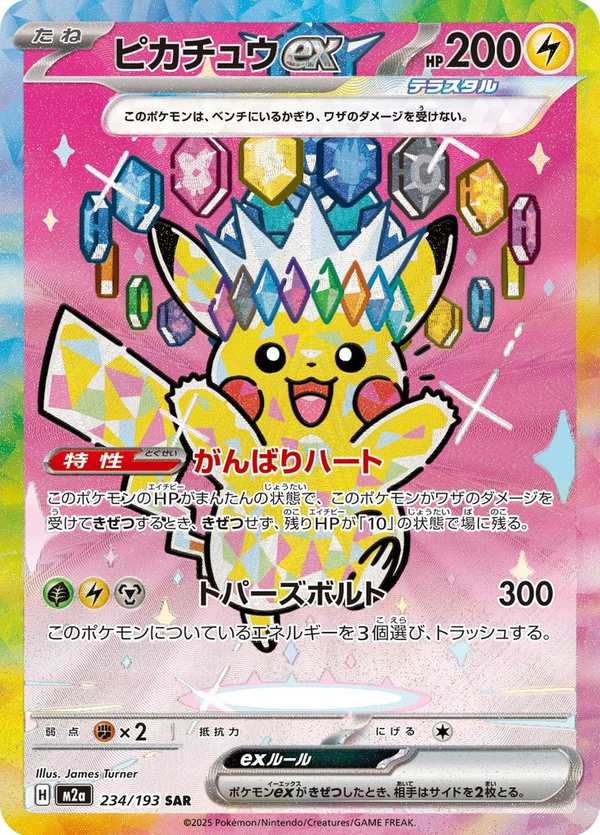
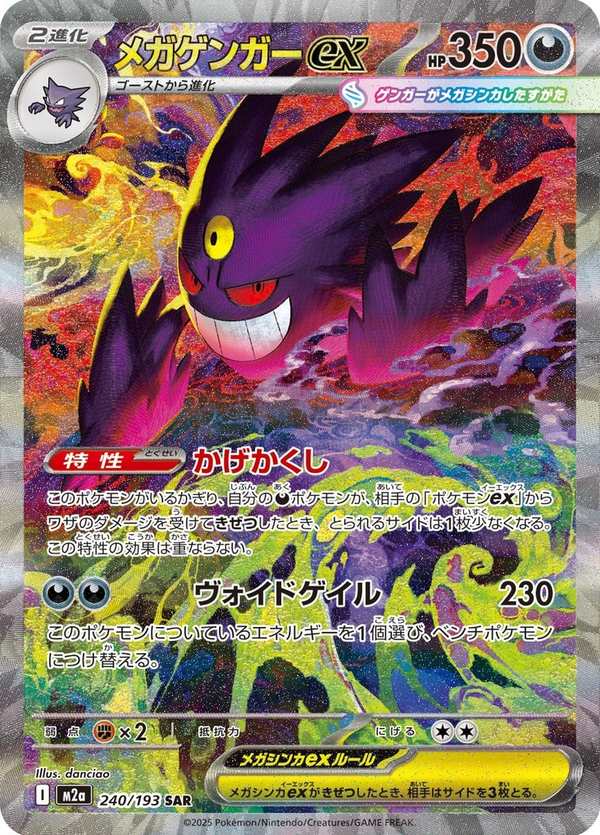
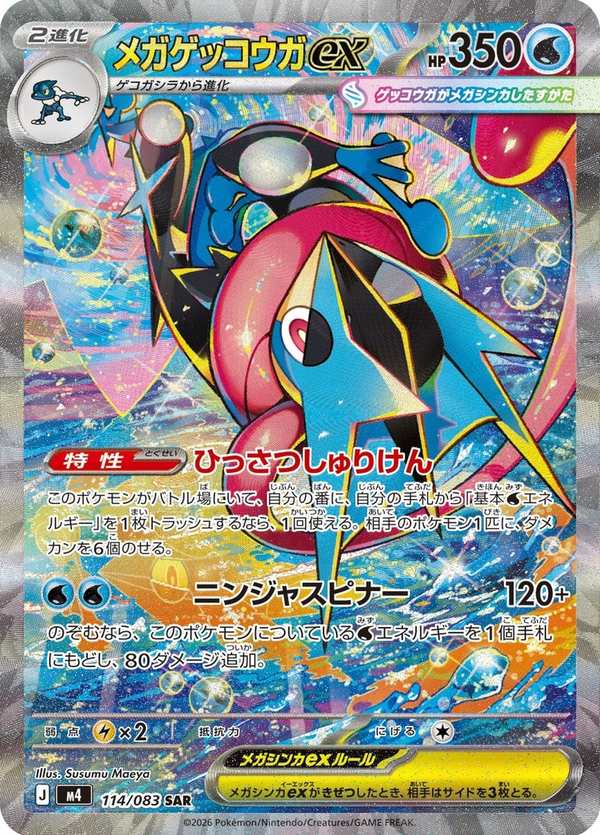
The four images also show how one 2026 theme can span accessible MA cards, higher-priced SAR cards and several characters. Collectors do not have to chase only the highest price. Use the M2a complete card list and M4 complete card list to confirm card number, rarity and variants first.
05
The 30th-anniversary effect: products, dates and risk
The Pokémon brand anniversary, the card game's anniversary and product releases are separate dates.
Chronology matters. The Pokémon brand marked 30 years from the Japanese launch of Red and Green on 27 February 2026. Japan's Pokémon Card Game traces its first release to 20 October 1996. The official Japanese and Hong Kong launch date for the 30th CELEBRATION expansion is 16 September 2026; Hong Kong's recommended retail price is HK$25 for a six-card all-holo pack. Selected 30th-anniversary card sets follow on 16 October. “The anniversary has begun” does not mean all anniversary supply is already circulating.
Official activity lifts attention across classic characters and historic products.
Vague expectation becomes identifiable products, cards and dates.
Expansion, Premium Deck Set and FUTURISTIC BOX arrive; allocation and replenishment replace speculation.
Anniversary attention can extend through year-end as further products release.
Review restocks, population growth, sell-through and spreads—not launch-week listings.
Why can an anniversary move older products?
Official campaigns put classic characters, the original 151, historic artwork and earlier anniversary releases back into search and social content. In SNKRDUNK's December 2025–April 2026 anniversary study, the 25th Anniversary Golden Box average transaction rose from ¥143,917 to ¥389,999 (+171%), while the 25th Special Set rose from ¥26,545 to ¥70,985 (+167.4%). The result shows attention spilling into earlier products, but also how rapidly prices can move away from original retail levels.
Demand upside
Search and narrative concentrateeBay said Pokémon drew more than 360 searches per minute in 2025 and Pikachu-item sales rose over 120% year on year.
Supply downside
Anniversary is not scarcityLotteries, restocks, reprints and heavy grading submissions expand supply; launch-week prices can reflect incomplete information.
After 16 September, Hong Kong buyers should track three things: official restocks and further lotteries; the timing gap between Japanese supply and Hong Kong arrival; and whether chase cards retain transaction depth after 30, 60 and 90 days. A high screen price with few completed sales is not deep liquidity.
06
Top 10 Cards Data Dashboard
Full-year 2025 is the baseline; 2026 H1 is the current comparable market snapshot.
2026 H1: SNKRDUNK Grade A single cards by transaction count
| Rank | Card | Card code | Published price from | Theme |
|---|---|---|---|---|
| 01 | Mega Charizard X ex MA | M2a 223/193 | ¥6,600 | Mega |
| 02 | Pikachu ex SAR | M2a 234/193 | ¥38,999 | Pikachu |
| 03 | Tohoku's Pikachu Promo | SV-P 260 | ¥13,500 | Regional promo |
| 04 | Mega Gengar ex MA | M2a 230/193 | ¥3,000 | Mega |
| 05 | Fukuoka's Pikachu Promo | SV-P 289 | ¥15,800 | Regional promo |
| 06 | Mega Gengar ex SAR | M2a 240/193 | ¥53,000 | Mega |
| 07 | Pikachu Promo | 001/SV-P | ¥5,000 | Promo |
| 08 | Hiroshima's Pikachu Promo | SV-P 261 | ¥16,900 | Regional promo |
| 09 | Mega Greninja ex SAR | M4 114/083 | ¥31,000 | Mega |
| 10 | Psyduck AR | M2a 199/193 | ¥2,400 | Accessible AR |
This ranking measures transactions, not price. The first-ranked card is cheaper than several SAR entries, demonstrating that liquidity and unit value are different. The price column is the source page's starting price when published on 9 July 2026. It is not today's executed price or a Hong Kong valuation.
Full-year 2025: SNKRDUNK Grade A single cards by transaction count
| Rank | Card | Card code/version | What it tells us in 2026 |
|---|---|---|---|
| 01 | McDonald's Pikachu Promo | M-P 020 | Wide availability can still support very high turnover |
| 02 | Umbreon ex SAR | SV8a 217/187 | 7,000+ transactions: character plus flagship art has depth |
| 03 | Pikachu Promo | 001/SV-P | Accessible entry point and grading demand |
| 04 | Detective Pikachu Promo | SV-P 098 | Game bonus with a bounded distribution story |
| 05 | Iono's Wattrel Promo | Box bonus | Trainer association plus AR visual appeal |
| 06 | Sylveon ex SAR | SV8a | Eeveelution demand spans players and collectors |
| 07 | Mega Charizard X ex SAR | M2 110/080 | MEGA momentum was established during 2025 |
| 08 | Illustration Contest Pikachu Promo | SV-P 242 | Art narrative plus completed distribution |
| 09 | Magikarp AR | SV1a 080/073 | Artist and international demand |
| 10 | Lillie's Determination SAR | M1L 091/063 | Trainer demand and lower PSA 10-rate narrative |
Viewed together, the two rankings show that the most frequently traded card is not necessarily the most expensive. Accessible promos can achieve high turnover through broad supply and character recognition; premium SAR cards depend more heavily on exact printing, condition and a narrower buyer pool. Before comparing value, confirm card code, language, rarity and printing, then separate raw and PSA transactions. The complete Pokémon card-list hub helps identify the card, while the Mega Charizard X printing guide explains common variant differences.
07
PSA grading output and the PSA 10 market
More grading can improve trust and liquidity while quickly changing a “low population” story.
GemRate's monthly recaps, compiled from grading-company population reports, show PSA processing about 15.21 million items from January through July 2026. Monthly volume was 1.91m, 1.86m, 2.17m, 2.21m, 2.07m, 2.50m and 2.49m. Every month was higher year on year, with June up 74%. These figures cover all PSA categories, not Pokémon alone, but they document the scale of the supply pipeline affecting graded collectibles.
PSA's official backlog tracker recorded 10.9 million active items globally on 25 August, down from 12.4 million on 28 July. A falling backlog does not mean supply disappears; it may mean submissions are being converted into graded inventory faster. For modern Pokémon cards, more PSA 10 copies can improve comparability and turnover while compressing premiums if buyer growth fails to absorb them.
2026 H1: SNKRDUNK PSA 10 transaction-count Top 10
| Rank | PSA 10 card | Card code | Published price from |
|---|---|---|---|
| 01 | McDonald's Pikachu Promo | M-P 020 | ¥13,100 |
| 02 | Mega Charizard X ex MA | M2a 223/193 | ¥21,000 |
| 03 | Pikachu ex SAR | M2a 234/193 | ¥83,500 |
| 04 | Pikachu Promo | 001/SV-P | ¥17,777 |
| 05 | 25th Anniversary Pikachu | s8a 001/028 | ¥10,390 |
| 06 | Mega Charizard X ex SAR | M2 110/080 | ¥166,999 |
| 07 | Mega Gengar ex SAR | M2a 240/193 | ¥92,800 |
| 08 | Tohoku's Pikachu Promo | SV-P 260 | ¥48,500 |
| 09 | Mega Gengar ex MA | M2a 230/193 | ¥11,700 |
| 10 | Umbreon ex SAR | SV8a 217/187 | ¥96,500 |
PSA 10 demand is not simply the raw ranking with a multiplier. McDonald's Pikachu can provide abundant, liquid entry inventory, while high-value SARs face tighter buyer budgets and condition constraints. Compare total population, PSA 10 population, gem rate, recent transactions and bid–ask spread together. Population screenshots should always carry a date.
Population
How much supply exists?Total population and PSA 10 counts change as newly submitted cards finish grading.
Liquidity
Does it actually sell?PSA says Auction Prices Realized contains more than five million auction results and updates daily; completed sales matter more than listings.
08
Six variables that drive card prices
The same character or artwork can sit in very different markets because identity and condition differ.
Set code, card number, language, promo origin and reprint status are more important than a loose card name.
Pikachu, Charizard, Gengar, Greninja and narrative SAR artwork can attract demand across markets.
Print run is only one input; sealed inventory, distribution, restocks and willingness to sell determine market supply.
A raw card cannot be valued at PSA 10. Centering, corners, surface, print lines and grading cost all matter.
One exceptional sale is a point, not a trend. Seek multiple 30–90-day comparables and a reasonable spread.
Yen, fees, freight, grading shipment, inspection, settlement convenience and after-sales risk create local differences.
A defensible price trend is not an unattributed smooth line. It is a repeatable comparison: same card number, language, grade, transaction venue and stated date, preferably using a median instead of the highest listing. When transactions are sparse, label the result low-liquidity rather than filling missing observations.
1 / Source
Completed-sale baseExclude listings, wrong variants and mixed conditions.
2 / Condition
Raw or gradedSeparate raw, PSA 9 and PSA 10 rather than assuming an ideal grade.
3 / Friction
FX and cross-border costUse transaction-date exchange rates and real fees.
4 / Liquidity
Actual Hong Kong buyerThe final price depends on buyers able to inspect, pay and settle now.
eBay's global data is useful context but not a direct Hong Kong valuation. eBay reported more than 360 Pokémon searches per minute on eBay.com in 2025; Charizard occupied five of the ten highest-value single-card sales, Rayquaza Dragon/Holo searches rose 170%, and Van Gogh Pikachu drew about 70 searches per hour. These figures show global character interest, not what a Hong Kong buyer will pay for one specific Japanese raw card.
09
A practical Hong Kong collector playbook
In an anniversary market, process is more dependable than prediction.
Before buying: resolve identity before asking for price
| Step | Confirm | Common mistake |
|---|---|---|
| 01 | Set code, number, language and rarity | Searching only “Pikachu SAR” and mixing cards |
| 02 | Separate raw, PSA 9 and PSA 10 | Using a PSA 10 headline to value a raw copy |
| 03 | Recent completed sales | Calling the highest listing “market price” |
| 04 | Date, venue, currency and fees | Repricing history with today's exchange rate |
| 05 | Population capture date | Treating low population as permanent scarcity |
| 06 | Inspection, authenticity and return risk | Ignoring physical verification and seller protection |
Observe anniversary products in three windows
0–7 days
Information priceSupply is incomplete and social attention dominates; volatility is highest.
30 days
First supply testRestocks, lotteries, opening volume and early grading become clearer.
90 days
Liquidity testTrack sale count and spread rather than whether one record high survives.
12 months
Collector-story testPersistent search and set completion after anniversary attention fades signal more durable demand.
A collector can reduce noise by writing a clear thesis: regional Pikachu promos familiar in Hong Kong, one artist, raw and PSA versions of the same code, or one complete M2a/M4 set. A defined scope makes storage, insurance and later sale records easier. A trader also needs total landed cost, median comparable sale, holding period and realistic exit venue. Cards have no central quote or guaranteed buyer; liquidity can contract quickly when attention moves elsewhere.
10
Three scenarios for the Pokémon TCG market in 2027
These are observable conditions, not a promise of a target price.
The most plausible 2027 outcome is deeper segmentation—not every card rising or falling together. The anniversary will bring new collectors, products and grading submissions, but it will also release more supply into the market. Character strength, a specific printing story, truly constrained sellable supply and recurring transaction depth should matter more than the presence of a “30th” logo.
Heat normalises; quality separates
Launch excitement fades, but Pikachu, Charizard, distinctive promos and strong SARs retain turnover while common high-population PSA 10 premiums narrow.
- Restocks normalise
- Populations keep rising
- Leaders trade; long tail slows
New players stay; Asian liquidity broadens
Hong Kong play, shows, shops and cross-border buyers continue growing, turning anniversary discovery into lasting collecting.
- Event participation stays high
- Transaction count expands
- Vintage and modern both find buyers
Supply arrives; liquidity contracts
Restocks, openings and PSA returns reach the market together as short-term holders sell; only genuinely scarce cards resist.
- Bid–ask spreads widen
- Transaction counts fall
- Modern high-population premiums compress
Five leading indicators to monitor
- 30/60/90-day 30th CELEBRATION sales: median and count, separated into raw, graded and sealed.
- PSA population growth: monthly additions, PSA 10 rate and how quickly buyers absorb supply.
- Hong Kong event capacity and participation: player retention says more about the ecosystem than one trophy-card sale.
- Top-10 concentration: persistent leadership by only one or two characters may signal weak breadth.
- Yen and cross-border friction: Hong Kong landed cost can move even when a Japanese transaction price does not.
After the 30th CELEBRATION launch, this report will add market observations in stages: initial supply and arrival conditions after seven days, transactions and restocks after 30 days, then the full-year 2026 ranking and updated PSA populations in early 2027. Each revision will show its data cut-off at the top of the page so readers can distinguish one market period from another.
11
FAQ, limitations and complete sources
Data improves decisions; it does not remove uncertainty.
Will Pokémon card prices definitely rise because of the 30th anniversary?
No. Published signals show demand concentrating in Pikachu, Mega Evolution, anniversaries and recognisable art. Reprints, rising graded supply, currency and liquidity can push individual prices down. Anniversary is an attention event, not a guarantee.
Does a lower PSA population always mean a more valuable card?
No. A low population may mean a card is new, grading is incomplete, demand is weak or submission is uneconomic. Character demand, exact printing, PSA 10 count, gem rate, recent transactions and spread must be reviewed together.
Is the SNKRDUNK ranking the Hong Kong Top 10?
No. It is a Japanese platform's public transaction ranking. Hong Kong's Japanese-card supply is closely linked to Japan, so it is a useful external reference, but it cannot be treated as total Hong Kong volume. Local events and reporting provide additional context.
When will this report be updated?
Data is current through 29 August 2026. Planned checkpoints are seven and 30 days after the 30th CELEBRATION launch and again in early 2027, using this same URL.
Primary sources
- SNKRDUNK — 2026 H1 Pokémon Grade A Top 50 (1 Jan–30 Jun 2026)
- SNKRDUNK — 2026 H1 Pokémon PSA 10 Top 50
- SNKRDUNK — 2025 Pokémon Top 100
- SNKRDUNK — 2026 sealed-box average transaction-price gainers
- SNKRDUNK — anniversary-product transaction study
- GemRate — 2026 monthly grading recaps
- PSA — official Backlog Tracker
- PSA — Auction Prices Realized methodology
- Pokémon Card Game 30th — official product page
- Pokémon TCG Asia Hong Kong — 30th CELEBRATION product details
- Pokémon TCG Asia Hong Kong — 2025–26 Master Ball League
- eBay — official 30th-anniversary marketplace signals
- SCMP — Hong Kong Pokémon card stores and play community

