In this guide
- 01Why OP-17 defines the fourth anniversary
- 02119 numbers and 169 images
- 03Six Leaders and six colours
- 04The Straw Hat Crew in Elbaph
- 05The Rocks Pirates arrive
- 06Four Emperors super alt-art cards
- 07SEC, SP and premium treatments
- 08Top 10 Hits showcase
- 09What players should watch
- 10Collector verification workflow
- 11Sealed-box buying decisions
- 12Frequently asked questions
01
Why OP-17 defines the fourth anniversary
The World's Strongest Warriors does more than place a pair of Secret Rare cards inside a popular booster. It combines the ONE PIECE Card Game's fourth anniversary with the Elbaph arc, the Straw Hat Crew's new outfits, the Four Emperors and the long-awaited Rocks Pirates. Manga readers, competitive players and character collectors therefore enter the set for different but connected reasons.
Bandai's official Asian product page highlights three pillars: Monkey D. Luffy's Super Leader Alt-Art, Super Alt-Art cards for the Four Emperors and the arrival of Rocks D. Xebec with the Rocks Pirates. Those official priorities provide a useful way to read the set. Start with Leaders and factions, separate the Four Emperors and two SEC cards, then move to SP cards and other cross-set treatments.
The Japanese version released on 22 August 2026. Bandai specifies six cards per pack and 131+4 total product types. Cardstop's 169-image checklist is larger because each visible printing is indexed separately. A base card, parallel and premium star treatment can share one number while remaining three distinct collecting targets.
02
119 base numbers and 169 card images
The numbered OP17 list runs from 001 to 119. Cardstop's source data records six Leaders, 45 Commons, 30 Uncommons, 26 Rares, ten Super Rares and two Secret Rares as the 119-card base skeleton. Leader parallels, SR and SEC variants, premium star treatments and SP cards then increase the visual checklist to 169 images.
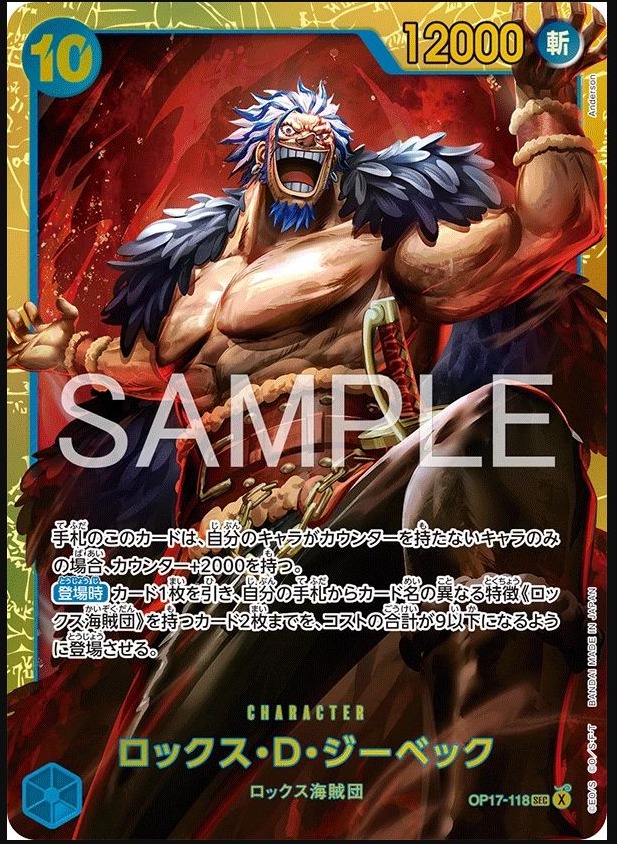
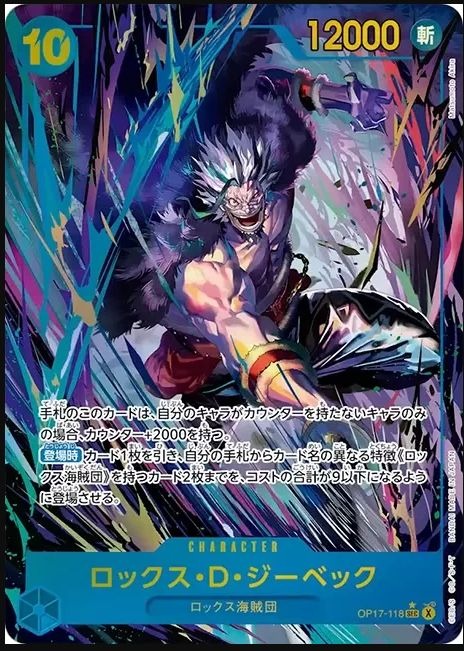
This distinction matters. Monkey D. Luffy OP17-079 appears as a standard Leader, a parallel and a Super Leader Alt-Art. Rocks D. Xebec OP17-118 appears as a standard SEC and premium images. A collection database that stores only one image per number cannot describe what a collector actually owns.
SP cards add a second complication. They may reuse a number from an older OP, EB, ST or promotional product, so a search limited to the OP17 prefix can miss them. Filter by SP or Parallel first, then use the character name.
| Layer | What to check | Common mistake |
|---|---|---|
| Base number | OP17-001 to OP17-119 | Treating 119 as the complete image count |
| Parallel | p1, p2 and other artwork variants | Comparing a base card with a premium version |
| SP | OP, EB, ST and promotional numbers | Searching only the OP17 prefix |
| Language | Japanese, English and Traditional Chinese | Confusing translated names with different cards |
03
Six Leaders and six strategic identities
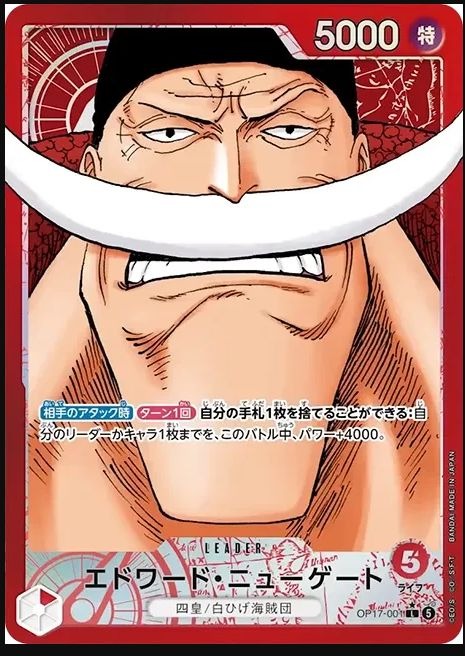
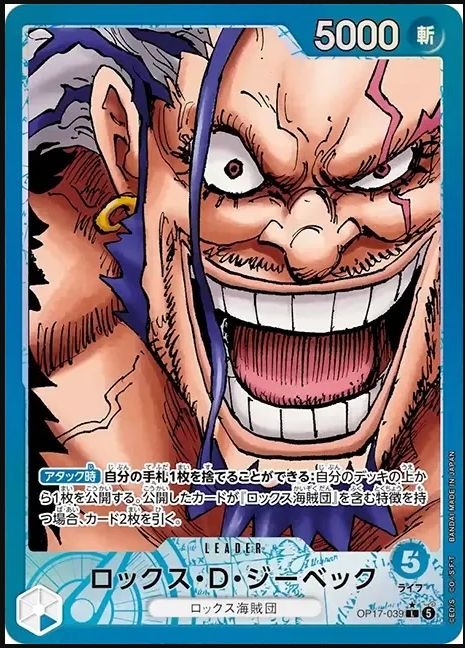
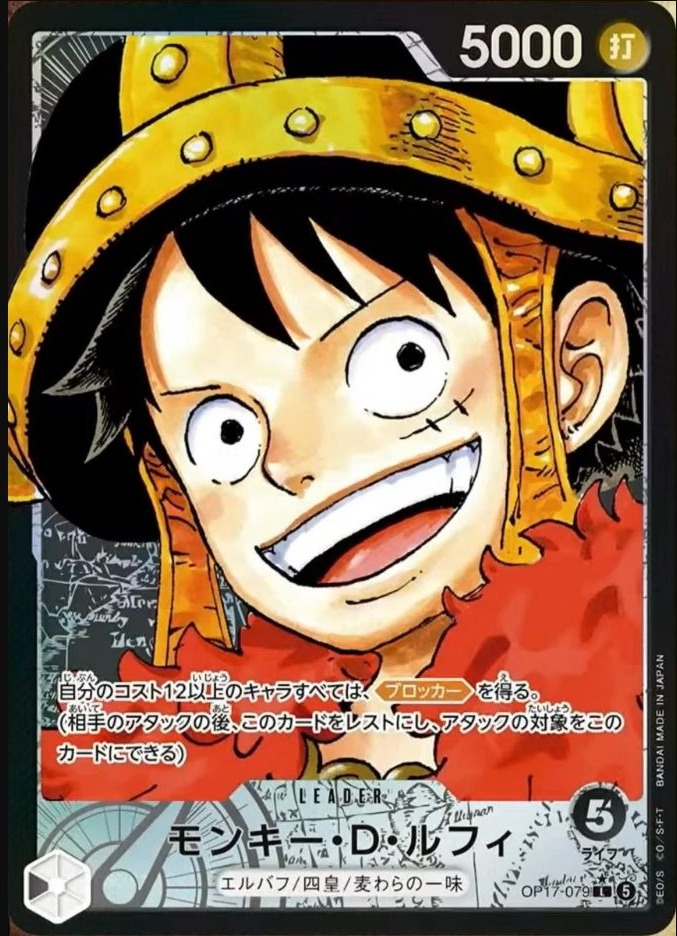
The six Leaders divide the set into clear story and deck groups. Red Edward Newgate represents the Whitebeard Pirates; green Shanks leads the Red-Haired Pirates; blue Rocks D. Xebec establishes the Rocks Pirates; purple Kaido accelerates large Animal Kingdom Pirates; black Monkey D. Luffy connects the Straw Hat Crew with Elbaph's giants; and yellow Charlotte Linlin develops the Big Mom Pirates and Trigger strategy.
For players, a Leader defines deck-building restrictions and game rhythm. Black Luffy grants Blocker to Characters with a cost of 12 or more, connecting giant Characters and Elbaph's Straw Hats. Blue Rocks uses disruption and multi-character development. Purple Kaido turns DON!! management into faster access to large threats, while green Shanks controls rested cards and yellow Linlin works with Life and Trigger cards.
For collectors, the rarity label remains essential. Bandai specifically promotes OP17-079's Super Leader Alt-Art, which uses manga imagery and a premium layout. It should not be reduced to the generic phrase “black Luffy parallel.” Store the full number, rarity and clear front image.
04
The Straw Hat Crew enters Elbaph
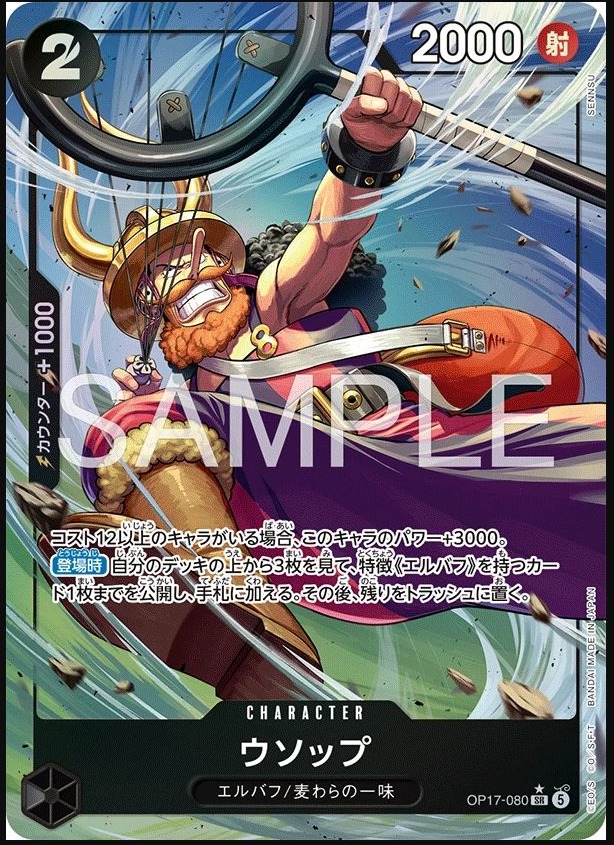
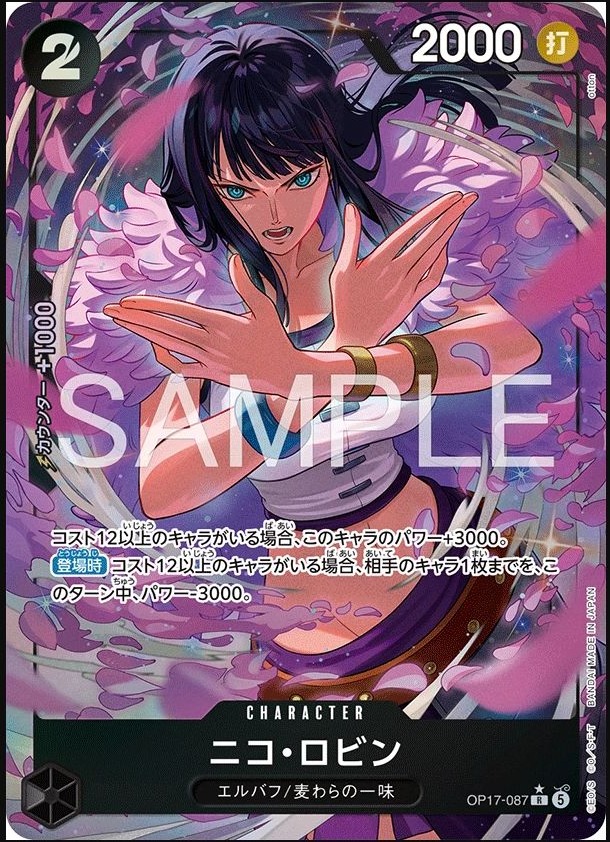
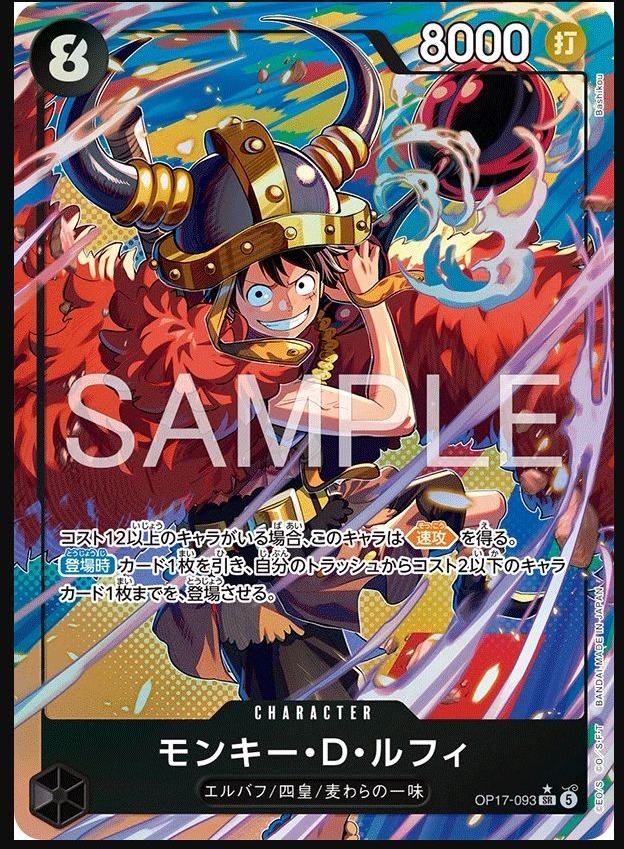
OP-17 is the first broad card-list appearance of the Straw Hat Crew in Elbaph outfits. Luffy, Zoro, Nami, Usopp, Sanji, Chopper, Robin, Franky, Brook and Jinbe appear alongside giants including Dorry, Brogy, Hajrudin, Gerd and Jaguar D. Saul. The result is a coherent visual collection as well as a working black deck identity.
Collectors can approach this section in two ways. A premium route focuses on the Super Leader Alt-Art Luffy, Usopp SR★, Nico Robin R★ and Luffy SR★. A character route builds a complete Straw Hat or Elbaph page using standard and premium cards together. The second option does not require every card to be the rarest printing; visual consistency and completion may matter more.
The cost-12 mechanic gives the theme real gameplay logic. Bandai's black Luffy deck guide explains how the Leader grants Blocker to Characters with cost 12 or higher. Giants can become cost 12 on the field, while Straw Hat Characters gain benefits when a large-cost Character is present.
05
The Rocks Pirates become a complete card-game faction
Rocks D. Xebec is not a one-card cameo. OP-17 builds a blue Leader and a full Rocks Pirates group including younger versions of Edward Newgate, Kaido and Charlotte Linlin alongside Wang Zhi, Captain John, Shiki, Gloriosa and Miss Buckingham Stussy. The faction gives manga history, character collecting and competitive deck construction one shared centre.
Rocks D. Xebec OP17-118 is also a late-game engine. Its On Play effect draws a card and can develop up to two different Rocks Pirates Characters from hand within a combined cost limit. Bandai's own guide illustrates combinations such as Charlotte Linlin with Kaido or Miss Buckingham Stussy with Edward Newgate.
Version identification is critical because Rocks appears as OP17-039 Leader and OP17-118 Character, with standard, parallel and premium treatments. “Rocks alt-art” is not a complete listing description. Confirm the number and the rarity symbol before comparing examples.
06
The Four Emperors form the clearest premium subset
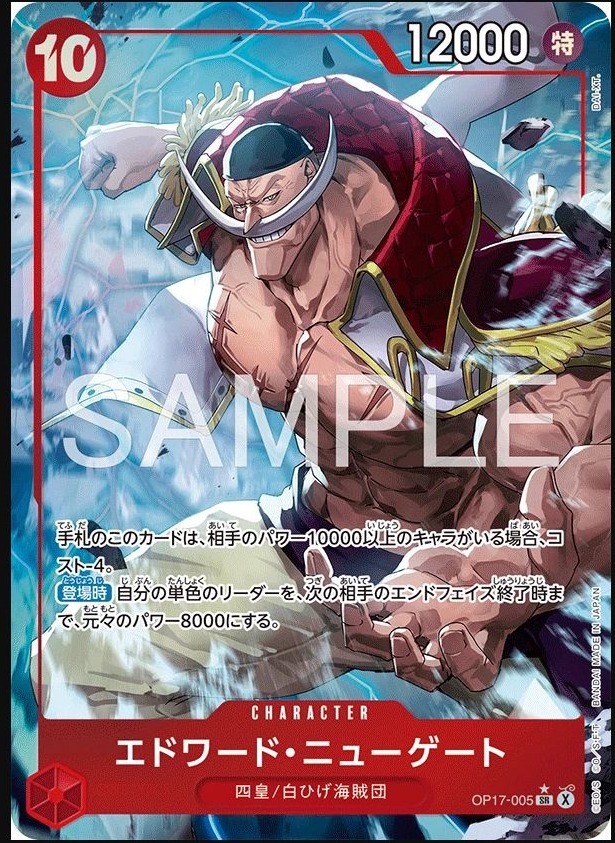
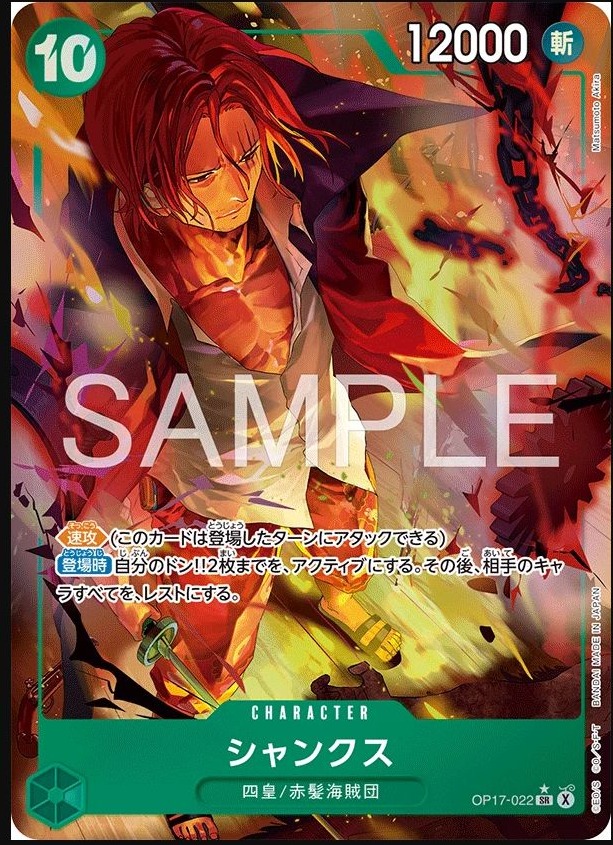
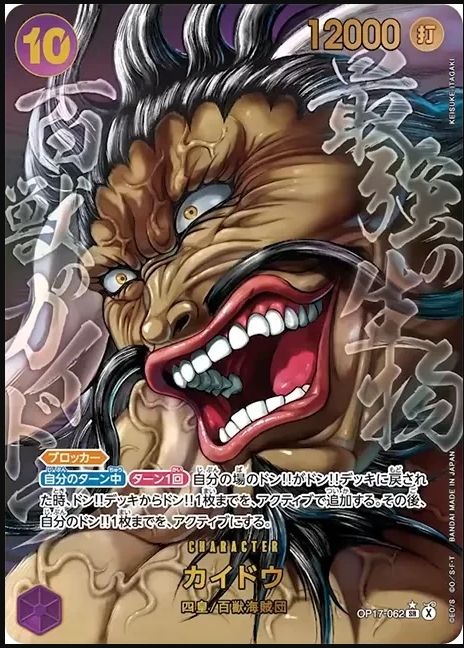
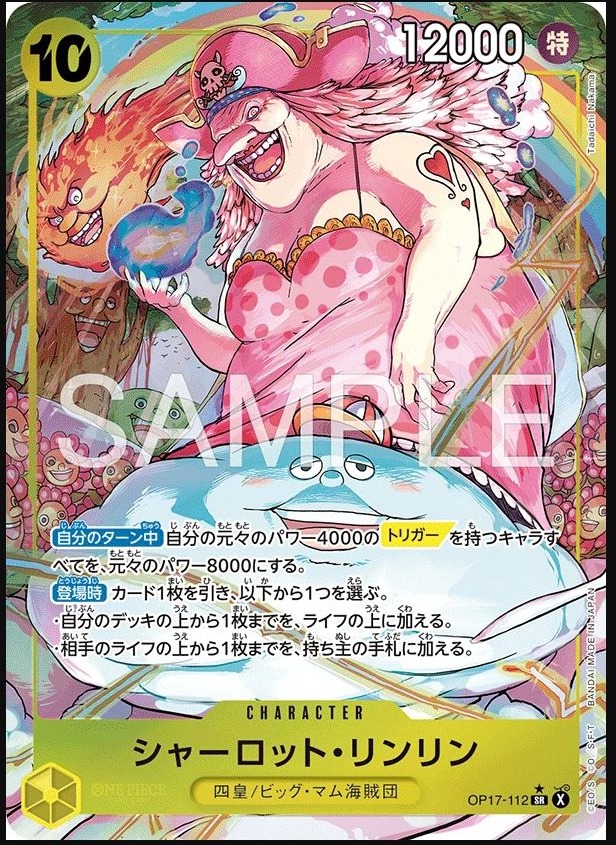
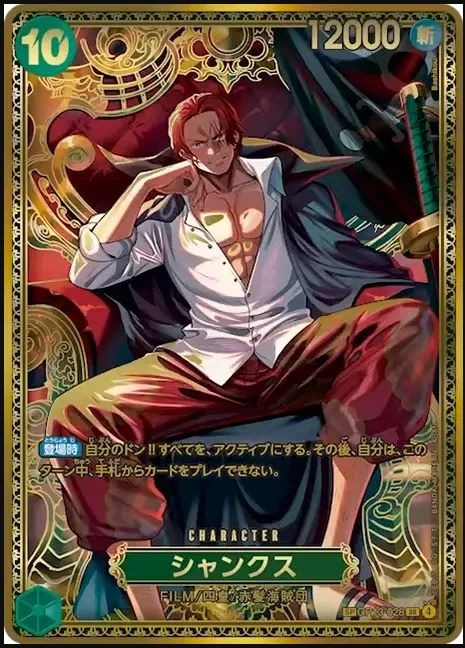
Edward Newgate OP17-005, Shanks OP17-022, Kaido OP17-062 and Charlotte Linlin OP17-112 carry the Four Emperors Super Alt-Art theme. The four cards share an anniversary-level treatment while keeping distinct characters, colours and compositions, making them a natural four-card collecting project.
They also connect to playable factions. Newgate supports the Whitebeard Pirates, Shanks belongs to the Red-Haired Pirates, Kaido works within the purple Animal Kingdom line and Linlin supports Life and Trigger strategies. Play demand and collector demand can coexist, but they should not be treated as the same value signal.
Use the number before the character name. Newgate, Kaido and Linlin each have several OP-17 roles, so one name can refer to a Leader, a younger Rocks Pirates Character or a Four Emperors SR.
07
SEC, SP and premium treatments are different collecting layers
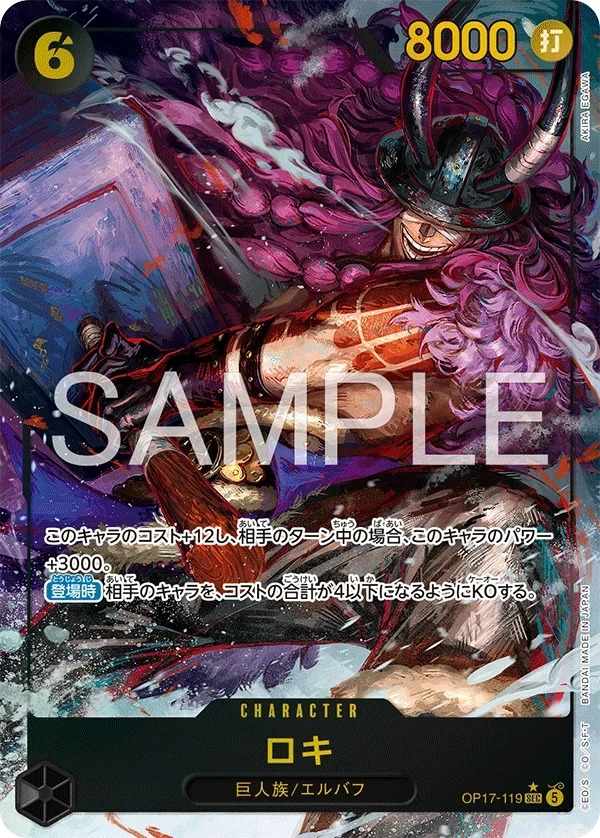
The base SEC line consists of Rocks D. Xebec OP17-118 and Loki OP17-119. Rocks anchors the Rocks Pirates, while Loki represents the Elbaph story. Sharing the SEC label does not make their artwork, play demand or collector audience identical.
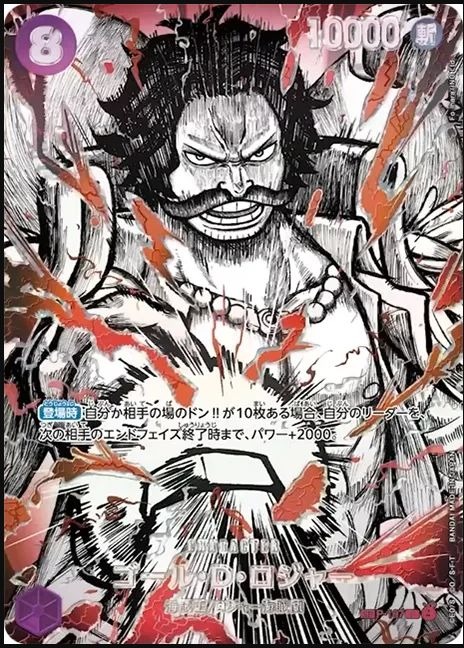
SP cards reuse numbers from other products. OP-17's SP layer includes major characters such as Gol D. Roger, Shanks, Roronoa Zoro, Monkey D. Garp, Yamato, Kozuki Oden, Marshall D. Teach and Monkey D. Luffy. Their prefixes can therefore be P, EB, OP13 or ST rather than OP17.
A practical hierarchy separates official headline formats, core set premiums and cross-set SP art. The first two layers define OP-17 most directly; SP cards are often better collected by character or artist.
08
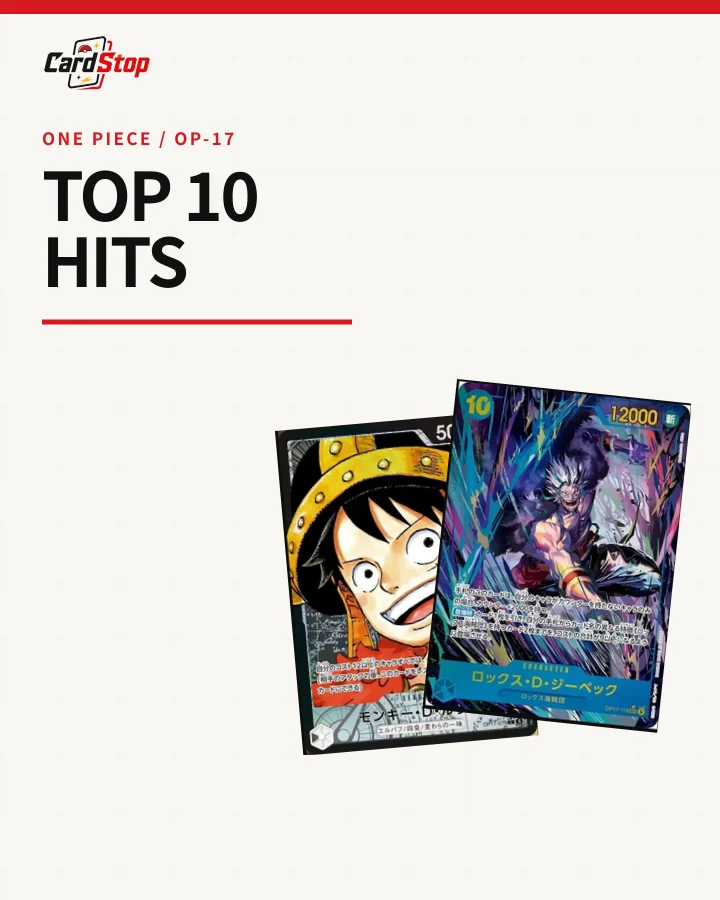
Top 10 Hits showcase
The Top 10 uses five criteria: official premium treatment, character recognition, artwork, set identity and the ability to form a coherent collection. It gives readers a practical order for reviewing the set; transaction prices should still be compared by date, platform, condition and exact printing.
Monkey D. Luffy Super Leader Alt-Art
OP17-079 · L★Bandai’s headline card combines manga artwork, the Elbaph outfit and the black Leader identity in the set’s strongest single visual statement.
Rocks D. Xebec SEC★
OP17-118 · SEC★A new faction leader, late-game engine and full-art premium card. Its story and set identity are unusually concentrated.
Edward Newgate Super Alt-Art
OP17-005 · SR★The Whitebeard entry in the Four Emperors subset, with long-term character recognition and cross-era collecting potential.
Shanks Super Alt-Art
OP17-022 · SR★The Red-Haired Pirates connect directly with the Four Emperors visual programme. Keep it separate from Leader and SP versions.
Kaido Super Alt-Art
OP17-062 · SR★A large premium composition tied to the purple Animal Kingdom line and younger Rocks-era Kaido cards.
Charlotte Linlin Super Alt-Art
OP17-112 · SR★The yellow member of the Four Emperors set, with gameplay links to Life and Trigger Characters.
Loki SEC★
OP17-119 · SEC★The Elbaph story’s new-character highlight and the visual counterpoint to Rocks in the two-card SEC line.
Gol D. Roger SP
P-107 · SPA cross-set premium using a promotional number—an important example of why OP17-only searches miss SP cards.
Shanks SP
OP13-028 · SPA second premium route for Shanks collectors, distinct from the Four Emperors SR★ and OP17 Leader.
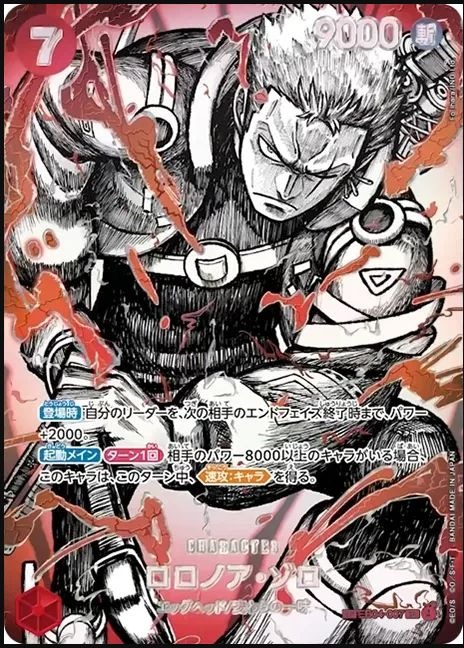
Roronoa Zoro SP
EB04-007 · SPA major Straw Hat character whose special artwork extends OP-17 beyond the Elbaph outfit checklist.
Collectors can turn the list into four manageable projects: Luffy and the Elbaph Straw Hats, the Four Emperors set, Rocks and the Rocks Pirates, or the cross-set SP cards. A defined theme controls budget and creates a better display than chasing every premium card at once.
09
For players: choose the deck skeleton before the rare printing
Six colours do not mean every premium card has equal competitive demand. Start with a Leader, required four-of cards, curve and compatibility with earlier sets. Black Luffy needs the cost-12 and Elbaph structure; blue Rocks needs Rocks Pirates development and disruption; purple Kaido manages DON!! for large Characters; green Shanks controls rested cards; yellow Linlin uses Life and Triggers; red Newgate continues the Whitebeard attack plan.
A standard card and its premium parallel have the same game effect. Competitive players can use base printings, while collectors who also play may keep premium versions protected to avoid shuffle wear. This separates play utility from collector premium.
Official recommended decks are a reliable explanation of intended mechanics, not a permanent metagame verdict. Later releases, restrictions and player testing can change the best list.
10
A five-step collector verification workflow
- Record the full number: use OP17-079 or OP17-118, not only Luffy or Rocks.
- Record rarity: separate L, L★, SR, SR★, SEC, SEC★, SP and Parallel.
- Match artwork: compare pose, border, background and lower-right treatment.
- Confirm language: Japanese, English and Asian Traditional Chinese cards can differ in typography, copyright line and release timing.
- Inspect the physical copy: front, back, corners, surface, dents and print lines determine condition.
Cardstop's card list helps answer “which printing is this?” A transaction still needs clear photographs of the actual card, seller history, payment protection and agreed delivery terms. Identity and condition are separate checks.
11
Sealed box or single card? Decide what experience you want
A sealed box suits collectors who value the opening experience, want to build the base set or plan to trade duplicates. A buyer who wants one Top 10 card can usually control the outcome more directly through the exact single. Booster packs are random products; Bandai warns that duplicates may appear and that completing the set through packs can be difficult. No individual box should be represented as guaranteeing a specific premium hit.
Release-week prices can move with Japanese allocation, opening volume and character demand. Compare the same number, treatment, condition and currency, and record the observation date. One social-media listing or the highest asking price is not a market average.
Cardstop's homepage provides group-buy reference prices for Japanese sealed products rather than a ready-stock singles catalogue. Supply and final price are confirmed after enquiry. A base-set project can combine sealed opening, trading and selected singles; a premium-character project should reserve most of its budget for the exact version.
FAQ
OP-17 frequently asked questions
When did Japanese OP-17 release?
Bandai's Asian product page lists 22 August 2026. Each pack contains six cards.
Why does Bandai list 131+4 types while Cardstop shows 169 images?
Bandai's figure is a product specification. Cardstop separates base cards, parallels, Leader★, SR★, SEC★ and SP images for collection tracking.
How many Leaders are in OP-17?
Six: Edward Newgate, Shanks, Rocks D. Xebec, Kaido, Monkey D. Luffy and Charlotte Linlin.
What are the two SEC cards?
Rocks D. Xebec OP17-118 and Loki OP17-119. Both numbers also have premium image treatments.
Is the Top 10 a live price ranking?
No. It is an editorial order based on character, artwork, official premium treatment and set identity. Actual transaction prices and supply change over time and by condition.
How can I find SP cards quickly?
Use the SP or Parallel filter on Cardstop's OP-17 list, then search the character. Some SP cards retain older OP, EB, ST or promotional numbers.
Does Cardstop sell every single shown in the guide?
No. The guide and card list are reference tools. Cardstop currently focuses on Japanese sealed group-buy enquiries.
How this guide was compiled
Cardstop cross-checked Bandai's official product page, official card records, official recommended decks and the 169-image OP-17 dataset. Numbers, names and variants are verified first; collector highlights are then organised using the editorial criteria stated in the article.
- Verify identity by official number and name
- Separate every base and artwork variant
- Use official product and deck pages to explain the set
- Label changing supply and price context clearly
PRIMARY SOURCES
Sources
- ONE PIECE CARD GAME Asia | Official OP-17 product page ↗
- ONE PIECE CARD GAME Asia | Official card list ↗
- Official recommended deck | Black Monkey D. Luffy ↗
- Official recommended deck | Blue Rocks D. Xebec ↗
- Cardstop | Complete OP-17 169-image checklist ↗
Last checked: 30 August 2026. Traditional Chinese card names follow Bandai's Asian Traditional Chinese site; English and Japanese names remain searchable in Cardstop's card list.


